

- 7 Tips for Holiday Hostess Gift Ideas | Golden Rules Gal™
- About
- Dining Etiquette Masterclass
- Gen Z Etiquette Course | Modern Manners Online & Off | Lisa Grotts
- Journal
- Media Contact
- Meet Lisa – Etiquette Expert
- News
- NEWS
- Online Dining Etiquette Courses
- Privacy Policy
- Sitemap
- Youtube Channel
- Zoom with Lisa
Meet Lisa Grotts: Etiquette Expert
My Story

Lisa Mirza Grotts, known as the “Golden Rules Gal™,” is a renowned etiquette expert, author, and public speaker with well over 25 years of experience helping individuals navigate social and professional situations with confidence, grace, and authenticity. Widely recognized for her expertise in both traditional and modern manners, Lisa shares timeless guidance rooted in civility, consideration, and compassion. Her insights cover a broad range of topics, from table manners and communication skills to professional decorum and everyday social interactions.
At the heart of Lisa’s passion for etiquette are the values instilled by her Assyrian American family, who made profound sacrifices to build a life in the United States. Their resilience, respect for others, and deep appreciation for opportunity continue to shape the perspective behind her advice. Lisa believes that courtesy, kindness, and respectful behavior remain timeless essentials.
As a “new school” etiquette expert, Lisa honors the traditions of classic etiquette while thoughtfully adapting them for modern life. She believes etiquette is not about rigid rules, but about awareness, empathy, and respect for others. By blending timeless principles with contemporary realities, she makes etiquette approachable, practical, and meaningful for today’s world.
Rather than simply teaching rules, Lisa encourages individuals to develop the confidence to make thoughtful and intuitive choices grounded in kindness and respect. When behavior stems from these values, she believes it has the power to elevate relationships, strengthen communities, and transform everyday interactions.
Lisa’s expertise has been featured widely in national and international media, and she frequently appears on television and radio programs sharing practical advice for navigating modern social situations with ease and confidence.
She is a former Director of Protocol of San Francisco, a Certified Etiquette Professional, and a former member of the International Society of Protocol and Etiquette Professionals.
Cradle of Civility
My roots trace back to Mesopotamia, the cradle of civilization—what I like to think of as a cradle of civility. My grandparents, Christian Assyrians, immigrated to the United States in the 1950s, making profound sacrifices to build a new life for their family. Their journey—one of resilience, faith, and determination—is told by my father in his book An Assyrian Dream: The Mirza Family Story. Their story is, in many ways, the American dream.
Today, the United Nations Educational, Scientific and Cultural Organization (UNESCO) recognizes Assyrians as an endangered population. It’s a reminder that culture, heritage, and values must be preserved and passed down.I believe each of us carries our history with us. And without civility, no civilization can truly thrive. Etiquette once served as the social glue that helped people coexist with respect and understanding. While some rules may feel outdated, the underlying principles of kindness, consideration, and respect remain timeless.
I first understood this lesson at the age of ten. A jet tragically crashed into Farrell’s Ice Cream Parlor in Sacramento, killing twelve children and ten adults. Among the victims were my school friend Elaine Jugum and her father, Louis.
When my mother told me we would visit the Jugum family to pay our respects, I resisted out of fear—it was my first experience with death. But my mother believed deeply in empathy and the importance of showing up for others in difficult moments.
As we walked home, she told me that sometimes we must do things we don’t want to do because it matters to someone else. Then she said something I’ve never forgotten: “The kindness you give to others is the kindness you invite into your own life.”
A Solid Foundation
My work in etiquette is deeply rooted in my upbringing. In many ways, I didn’t choose this path—it chose me.
I discovered the meaning of manners in a home that was always full of people. Relatives, friends, and neighbors seemed to flow endlessly through our doors. My mother taught me the art of hospitality: make everyone feel welcome, make sure no one is overlooked, and always look for ways to make others comfortable.
Our house was the liveliest on the block. If there weren’t twenty people gathered around the table, it hardly felt like a celebration. Those moments shaped me. They taught me resilience, generosity, and the quiet power of making others feel seen and valued. The lessons my family gave me became the foundation of my passion for etiquette—and remain my anchor today.
I loved listening to the colorful stories shared by relatives and family friends. Their wisdom was simple but lasting: show compassion, give generously, and treat people well. When you do, kindness often finds its way back to you.
At first, I thought I was simply lucky with people. Over time, I realized that what looked like luck was really a reflection of the values I carried with me—values that followed me across the ocean when I studied abroad in Great Britain.
In 1983, during my junior year at Oxford, I visited the British Museum and stood in Room 6, face to face with two enormous Assyrian winged-bull statues. I had promised my mother I would see the famous Assyrian exhibit.
As I stood there, my roommate Joyce whispered that two women were staring at me. Without even turning around, I had a feeling—they must be Assyrian. They were.
That moment led to an unexpected connection. One of the women, Nina, introduced herself, and soon she and her family welcomed me into their lives. For the next four months, I often took the train from Oxford to London to spend weekends with Nina and her husband, Colin. Their children were grown, though I occasionally saw their daughter, Carrie.
I was 5,000 miles from home, yet I felt an immediate sense of belonging. Nina had plucked me from a museum gallery and welcomed me as if I were family.
That experience reminded me how powerful shared heritage and human connection can be. My Assyrian roots have always shaped how I see the world—and they continue to influence the lessons I share about etiquette today.
Etiquette Credentials
My professional training in etiquette and protocol began during my time as Director of Protocol for San Francisco Mayor Willie L. Brown, Jr. In that role, I organized international trade missions and managed protocol for visiting dignitaries from around the world. Among them were His Holiness the 14th Dalai Lama, President Bill Clinton, John F. Kennedy Jr., the prime ministers of Russia and Jamaica, the presidents of Brazil, Greece, the Philippines, and South Korea, Ambassador Pamela Harriman, and Pio Cardinal Laghi.
The position demanded precision, diplomacy, and the ability to solve problems quickly—often under intense pressure.
On one trade mission to Shanghai, San Francisco’s oldest sister city, our delegation hosted a formal dinner at the Shanghai Library. But there was one unexpected complication: the tablecloths we had brought for the event were confiscated at the Beijing airport. With only 48 hours before the banquet, I had to find a solution.
There was one more challenge—I didn’t speak Chinese, and no one around me spoke English.
For a moment, panic set in. Then I remembered something my mother told me when I was thirteen years old. I had been struggling with a science project and walked out of my room in tears, hoping for sympathy. Instead, she calmly told me that I could figure it out—and that learning to solve problems on my own would one day serve me well.
In that moment in Shanghai, her words came back to me.
Strength and resilience were woven into my family’s values, and those lessons carried me through. Somehow—through persistence, creativity, and a bit of determination—forty-eight red tablecloths appeared just in time for the dinner.
That experience reinforced something I have believed ever since: with resourcefulness and confidence, almost any challenge can be solved.
After my time at City Hall, I continued my professional training at protocol school in Washington, D.C., became a Certified Etiquette Professional, and launched LisaGrotts.com, where I provide etiquette and protocol training.
Over the years, my clients have included leading corporations and institutions such as BlackRock, KPMG, Oracle, Levi Strauss & Co., American Airlines, Cornell University, the University of California, Berkeley, and Stanford Hospital.
Giving Back
My parents gave me the best inheritance, but it wasn’t money. It was the inspiration to achieve my goals and aspirations—to sing “The Star-Spangled Banner” at Candlestick Park at a Giants game, write two books on travel etiquette, pen a manners blog for HuffPost, and build a separate career in the nonprofit world.
For the past 25 years, I have shown appreciation for my good fortune by raising millions of dollars for nonprofit organizations, including the Assyrian Aid Society of America, California Pacific Medical Center, the Junior League of San Francisco, San Francisco Ballet, San Francisco Conservatory of Music, San Francisco Museum of Performance and Design, San Francisco Suicide Prevention, and the San Francisco Symphony.
Currently, I raise money for pediatric cancer and serve in the Most Venerable Order of the Hospital of St John of Jerusalem, a British order of chivalry founded by Queen Victoria in 1888. I also serve on the Board of Directors of the Bishop’s Ranch in Healdsburg, California, an Episcopal Diocese retreat that provides lodging and summer camps for religious and educational groups. In addition, I proudly serve as a board member of the Healdsburg Food Pantry, supporting its mission to provide food and resources to families in need. I also serve with Elks Lodge 901, a community devoted to charity, fellowship, and patriotic service.
Etiquette in a Changing World
In March of 2020, we fell asleep in one world and woke up in another. The paradigm of communication changed: a handshake suddenly felt uncertain, and “don’t stand so close to me” became polite. With the resilience of my background, when “life-quakes” happen, I look for the positive quickly. The way each of us faces challenges shows who we are.
When life came to a screeching halt, the Golden Rule required new ways of interacting. Being mindful of personal space and respecting one another’s comfort levels became everyday courtesies. Those small acts showed responsibility and concern for ourselves and others. That period reminded us of the basics and helped us recognize what truly matters, even in times of uncertainty.
The rules of etiquette didn’t change, but their priorities shifted. My napkins weren’t so starched because I wasn’t entertaining. Every day felt like a bad hair day when the salons were closed. Yet as we adapted to new habits and expectations, one truth remained clear: treat others as you want to be treated, think before you act or speak, and always be grateful, thankful, and appreciative.
Most of all, “be kind, so you never have to rewind.”
You may feel uncomfortable navigating our evolving world, but you have everything to gain by understanding the new rules of behavior. They are rooted in where we come from and guide where we are headed.
New Manners Movement
Etiquette is not reserved for special occasions. It matters every day. True manners go far beyond knowing which fork to use or how to fold a napkin—they reflect a genuine awareness of and consideration for others.
My brand is rooted in good behavior. It’s serious work because how we treat people has the power to positively influence lives. Every person we encounter reflects something back to us, and the way we respond to that reflection speaks volumes about who we are.
Laura Ingalls Wilder’s Little House in the Big Woods offers a glimpse into life on the American frontier and reminds us of enduring values—honesty, generosity, and kindness. These timeless qualities feel more important than ever today.
At its core, etiquette is about behavior and respect. As social norms evolve and new challenges emerge, I share observations and offer thoughtful guidance—modernizing the principles that have long helped us treat one another with dignity and grace.
Follow Lisa on Instagram @GoldenRulesGal

My Story
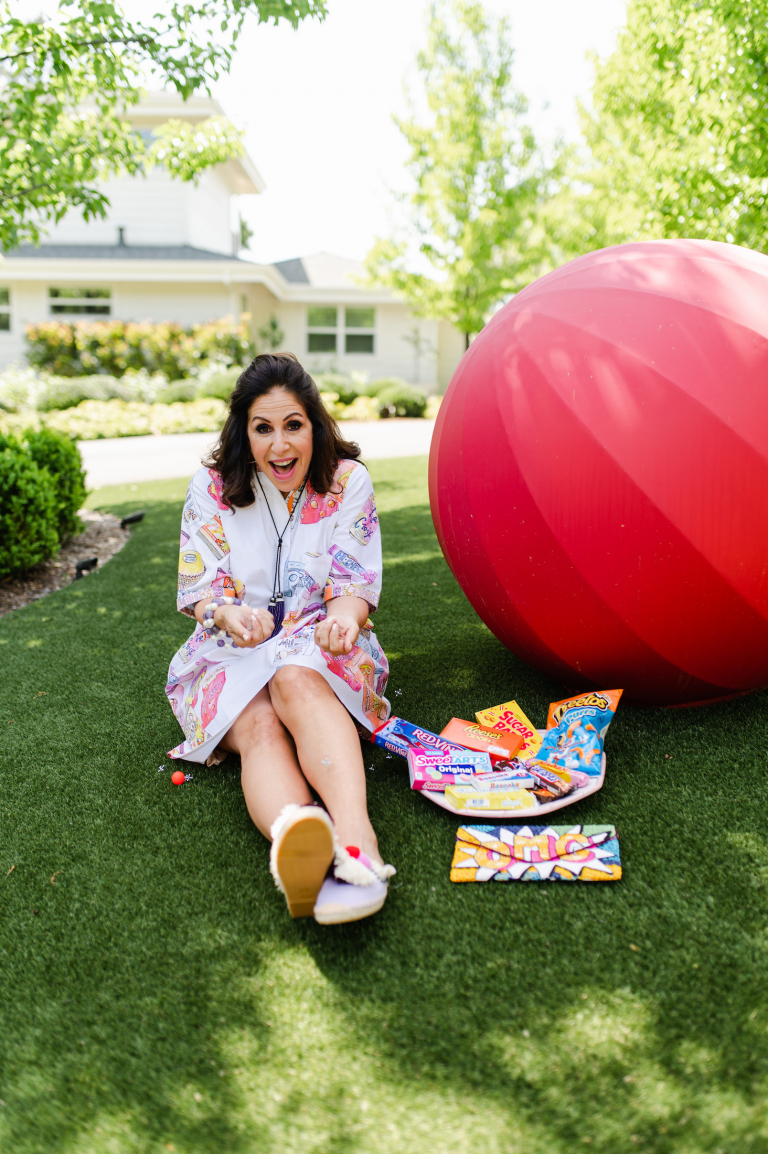
Lisa Mirza Grotts, known as the “Golden Rules Gal™,” is a renowned etiquette expert, author, and public speaker with well over 25 years of experience helping individuals navigate social and professional situations with confidence, grace, and authenticity. Widely recognized for her expertise in both traditional and modern manners, Lisa shares timeless guidance rooted in civility, consideration, and compassion. Her insights cover a broad range of topics, from table manners and communication skills to professional decorum and everyday social interactions.
At the heart of Lisa’s passion for etiquette are the values instilled by her Assyrian American family, who made profound sacrifices to build a life in the United States. Their resilience, respect for others, and deep appreciation for opportunity continue to shape the perspective behind her advice. Lisa believes that courtesy, kindness, and respectful behavior remain timeless essentials.
As a “new school” etiquette expert, Lisa honors the traditions of classic etiquette while thoughtfully adapting them for modern life. She believes etiquette is not about rigid rules, but about awareness, empathy, and respect for others. By blending timeless principles with contemporary realities, she makes etiquette approachable, practical, and meaningful for today’s world.
Rather than simply teaching rules, Lisa encourages individuals to develop the confidence to make thoughtful and intuitive choices grounded in kindness and respect. When behavior stems from these values, she believes it has the power to elevate relationships, strengthen communities, and transform everyday interactions.
Lisa’s expertise has been featured widely in national and international media, and she frequently appears on television and radio programs sharing practical advice for navigating modern social situations with ease and confidence.
She is a former Director of Protocol of San Francisco, a Certified Etiquette Professional, and a former member of the International Society of Protocol and Etiquette Professionals.
Cradle of Civility
My roots trace back to Mesopotamia, the cradle of civilization—what I like to think of as a cradle of civility. My grandparents, Christian Assyrians, immigrated to the United States in the 1950s, making profound sacrifices to build a new life for their family. Their journey—one of resilience, faith, and determination—is told by my father in his book An Assyrian Dream: The Mirza Family Story. Their story is, in many ways, the American dream.
Today, the United Nations Educational, Scientific and Cultural Organization (UNESCO) recognizes Assyrians as an endangered population. It’s a reminder that culture, heritage, and values must be preserved and passed down.I believe each of us carries our history with us. And without civility, no civilization can truly thrive. Etiquette once served as the social glue that helped people coexist with respect and understanding. While some rules may feel outdated, the underlying principles of kindness, consideration, and respect remain timeless.
I first understood this lesson at the age of ten. A jet tragically crashed into Farrell’s Ice Cream Parlor in Sacramento, killing twelve children and ten adults. Among the victims were my school friend Elaine Jugum and her father, Louis.
When my mother told me we would visit the Jugum family to pay our respects, I resisted out of fear—it was my first experience with death. But my mother believed deeply in empathy and the importance of showing up for others in difficult moments.
As we walked home, she told me that sometimes we must do things we don’t want to do because it matters to someone else. Then she said something I’ve never forgotten: “The kindness you give to others is the kindness you invite into your own life.”
A Solid Foundation
My work in etiquette is deeply rooted in my upbringing. In many ways, I didn’t choose this path—it chose me.
I discovered the meaning of manners in a home that was always full of people. Relatives, friends, and neighbors seemed to flow endlessly through our doors. My mother taught me the art of hospitality: make everyone feel welcome, make sure no one is overlooked, and always look for ways to make others comfortable.
Our house was the liveliest on the block. If there weren’t twenty people gathered around the table, it hardly felt like a celebration. Those moments shaped me. They taught me resilience, generosity, and the quiet power of making others feel seen and valued. The lessons my family gave me became the foundation of my passion for etiquette—and remain my anchor today.
I loved listening to the colorful stories shared by relatives and family friends. Their wisdom was simple but lasting: show compassion, give generously, and treat people well. When you do, kindness often finds its way back to you.
At first, I thought I was simply lucky with people. Over time, I realized that what looked like luck was really a reflection of the values I carried with me—values that followed me across the ocean when I studied abroad in Great Britain.
In 1983, during my junior year at Oxford, I visited the British Museum and stood in Room 6, face to face with two enormous Assyrian winged-bull statues. I had promised my mother I would see the famous Assyrian exhibit.
As I stood there, my roommate Joyce whispered that two women were staring at me. Without even turning around, I had a feeling—they must be Assyrian. They were.
That moment led to an unexpected connection. One of the women, Nina, introduced herself, and soon she and her family welcomed me into their lives. For the next four months, I often took the train from Oxford to London to spend weekends with Nina and her husband, Colin. Their children were grown, though I occasionally saw their daughter, Carrie.
I was 5,000 miles from home, yet I felt an immediate sense of belonging. Nina had plucked me from a museum gallery and welcomed me as if I were family.
That experience reminded me how powerful shared heritage and human connection can be. My Assyrian roots have always shaped how I see the world—and they continue to influence the lessons I share about etiquette today.
Etiquette Credentials
My professional training in etiquette and protocol began during my time as Director of Protocol for San Francisco Mayor Willie L. Brown, Jr. In that role, I organized international trade missions and managed protocol for visiting dignitaries from around the world. Among them were His Holiness the 14th Dalai Lama, President Bill Clinton, John F. Kennedy Jr., the prime ministers of Russia and Jamaica, the presidents of Brazil, Greece, the Philippines, and South Korea, Ambassador Pamela Harriman, and Pio Cardinal Laghi.
The position demanded precision, diplomacy, and the ability to solve problems quickly—often under intense pressure.
On one trade mission to Shanghai, San Francisco’s oldest sister city, our delegation hosted a formal dinner at the Shanghai Library. But there was one unexpected complication: the tablecloths we had brought for the event were confiscated at the Beijing airport. With only 48 hours before the banquet, I had to find a solution.
There was one more challenge—I didn’t speak Chinese, and no one around me spoke English.
For a moment, panic set in. Then I remembered something my mother told me when I was thirteen years old. I had been struggling with a science project and walked out of my room in tears, hoping for sympathy. Instead, she calmly told me that I could figure it out—and that learning to solve problems on my own would one day serve me well.
In that moment in Shanghai, her words came back to me.
Strength and resilience were woven into my family’s values, and those lessons carried me through. Somehow—through persistence, creativity, and a bit of determination—forty-eight red tablecloths appeared just in time for the dinner.
That experience reinforced something I have believed ever since: with resourcefulness and confidence, almost any challenge can be solved.
After my time at City Hall, I continued my professional training at protocol school in Washington, D.C., became a Certified Etiquette Professional, and launched LisaGrotts.com, where I provide etiquette and protocol training.
Over the years, my clients have included leading corporations and institutions such as BlackRock, KPMG, Oracle, Levi Strauss & Co., American Airlines, Cornell University, the University of California, Berkeley, and Stanford Hospital.
Giving Back
My parents gave me the best inheritance, but it wasn’t money. It was the inspiration to achieve my goals and aspirations—to sing “The Star-Spangled Banner” at Candlestick Park at a Giants game, write two books on travel etiquette, pen a manners blog for HuffPost, and build a separate career in the nonprofit world.
For the past 25 years, I have shown appreciation for my good fortune by raising millions of dollars for nonprofit organizations, including the Assyrian Aid Society of America, California Pacific Medical Center, the Junior League of San Francisco, San Francisco Ballet, San Francisco Conservatory of Music, San Francisco Museum of Performance and Design, San Francisco Suicide Prevention, and the San Francisco Symphony.
Currently, I raise money for pediatric cancer and serve in the Most Venerable Order of the Hospital of St John of Jerusalem, a British order of chivalry founded by Queen Victoria in 1888. I also serve on the Board of Directors of the Bishop’s Ranch in Healdsburg, California, an Episcopal Diocese retreat that provides lodging and summer camps for religious and educational groups. In addition, I proudly serve as a board member of the Healdsburg Food Pantry, supporting its mission to provide food and resources to families in need. I also serve with Elks Lodge 901, a community devoted to charity, fellowship, and patriotic service.
Etiquette in a Changing World
In March of 2020, we fell asleep in one world and woke up in another. The paradigm of communication changed: a handshake suddenly felt uncertain, and “don’t stand so close to me” became polite. With the resilience of my background, when “life-quakes” happen, I look for the positive quickly. The way each of us faces challenges shows who we are.
When life came to a screeching halt, the Golden Rule required new ways of interacting. Being mindful of personal space and respecting one another’s comfort levels became everyday courtesies. Those small acts showed responsibility and concern for ourselves and others. That period reminded us of the basics and helped us recognize what truly matters, even in times of uncertainty.
The rules of etiquette didn’t change, but their priorities shifted. My napkins weren’t so starched because I wasn’t entertaining. Every day felt like a bad hair day when the salons were closed. Yet as we adapted to new habits and expectations, one truth remained clear: treat others as you want to be treated, think before you act or speak, and always be grateful, thankful, and appreciative.
Most of all, “be kind, so you never have to rewind.”
You may feel uncomfortable navigating our evolving world, but you have everything to gain by understanding the new rules of behavior. They are rooted in where we come from and guide where we are headed.
New Manners Movement
Etiquette is not reserved for special occasions. It matters every day. True manners go far beyond knowing which fork to use or how to fold a napkin—they reflect a genuine awareness of and consideration for others.
My brand is rooted in good behavior. It’s serious work because how we treat people has the power to positively influence lives. Every person we encounter reflects something back to us, and the way we respond to that reflection speaks volumes about who we are.
Laura Ingalls Wilder’s Little House in the Big Woods offers a glimpse into life on the American frontier and reminds us of enduring values—honesty, generosity, and kindness. These timeless qualities feel more important than ever today.
At its core, etiquette is about behavior and respect. As social norms evolve and new challenges emerge, I share observations and offer thoughtful guidance—modernizing the principles that have long helped us treat one another with dignity and grace.